
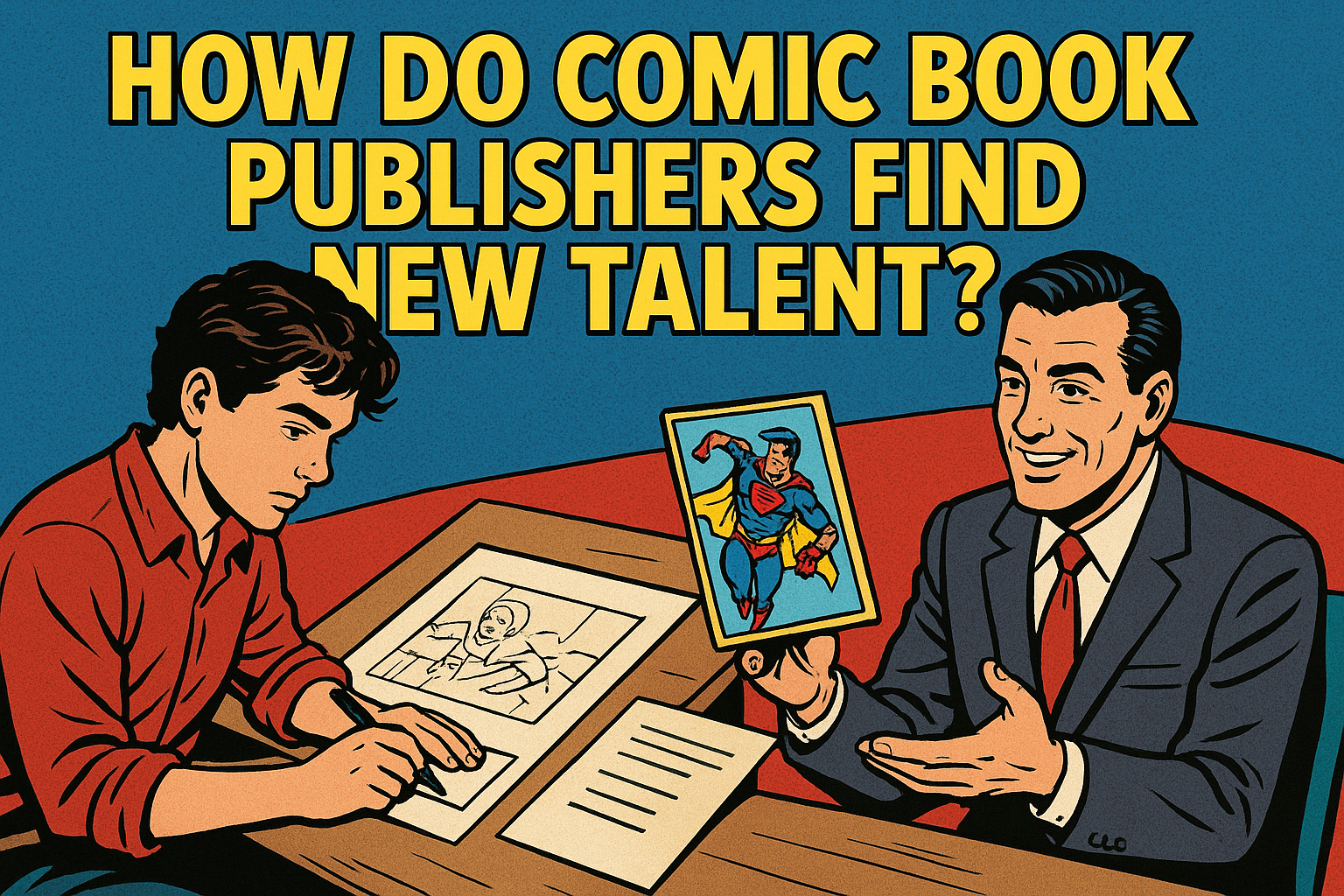
The comic world is a lively and exciting world. It is saturated with famous characters and pioneer narratives. To most aspiring writers and artists, the break into this industry is the dream of the day. But it may be as though it were an impossible fortress. What does a new producer do to break in?
The reality behind it is that Comic Book Publishers are in constant need of new voices. The business requires an infusion of new talent to come up with new stories to entertain the readers. However, the process of discovery is not very clear all the time. It is not merely a question of a single successful strike.
Entering a company is a combination of diligent effort, good tactics and the right place at the right time. There is no single path. Nonetheless, there are a number of general methods through which the next generation of superstars is discovered by editors and Comic Book Publishers.
Do Comic Book Publishers Accept Unsolicited Submissions?
This is the most widespread question. An unsolicited submission is the text of a pitch that an artist makes without being connected to the company. This was one of the popular methods of being spotted in the past. Somebody who wanted to become a writer would send a script by mail and somebody who desired to become an artist would send photocopies of their art.
Nowadays, this avenue is largely closed. Large firms such as Marvel and DC do not take unsolicited submissions. They are just given too many and it has got legal problems. Nevertheless, not all Comic Book Publishers have gone out of business. Such companies as Image Comics and Dark Horse have extremely precise submission policies.
These are the guidelines that should be observed in the letter. When a publisher requests a five page story, do not submit a 100 page graphic novel. Should they request a one page synopsis, do not submit a 20 page script. The majority of unsolicited pitching is thrown away. Yet to the very few who obey the rules, it is also a possible, but hardly easy, mode of entry.
Are Comic Conventions Still Important for Networking?
Yes, absolutely. Comic conventions are one of the most effective ways for new talent to meet industry professionals. Editors, writers, and established artists all walk the convention floor. The key area for this is the “Artists’ Alley.” This is where independent and aspiring artists can rent a table to show their work.
Editors make a point to walk through Artists’ Alley. They are actively looking for new styles and great storytelling. A face-to-face meeting, even a short one, is valuable. It puts a face to the name and allows an editor to see the work in person.
Many Comic Book Publishers also offer official portfolio reviews at conventions. These are scheduled meetings where a creator gets direct feedback from an editor. This is a chance to make a professional connection and get priceless advice. It is a direct line to the people who make hiring decisions.
What Should My Portfolio Look Like?
A portfolio is the single most important tool for a comic creator. But what are editors looking for? It is not what most people think. For an artist, a portfolio full of pinups or character posters is not very useful.
Comic Book Publishers are looking for one thing: sequential storytelling. Can the artist tell a clear story over multiple pages? The portfolio should have 4 to 6 pages of sample comic art. These pages must show characters acting, emoting, and interacting with their environment. They need to show a clear flow from one panel to the next.
For writers, it is more difficult. A script by itself is hard to judge. The best “portfolio” for a writer is a finished, or almost finished, comic. This means hiring an artist to draw a short story. This proves the writer can craft a complete narrative and manage a creative team. Many Comic Book Publishers will not look at a writer’s pitch unless art is already attached. For more details on building a portfolio, check out this helpful guide for comic creators.
How Can Social Media Help Me Get Noticed?
In the modern age, social media is a powerful discovery tool. Platforms like X (formerly Twitter) and Instagram are visual. They are perfect for comic artists. Many editors and established creators are very active on these platforms. They follow artists they like and share work that impresses them.
Countless artists have received their first professional job because an editor saw their art online. The key is consistency. Posting new art regularly, using relevant hashtags, and engaging with the comic community builds visibility. It is a slow process, but it turns the artist’s feed into a living portfolio.
This strategy works best for artists. For writers, it is harder. But they can use social media to build a following. They can also connect with artists to collaborate. Many Comic Book Publishers watch an artist’s social media to see if they are professional and can hit deadlines.
Does Making My Own Indie Comic Help?
This is one of the best strategies. Instead of waiting for permission, creators make their own comics. They self-publish, run a webcomic, or use crowdfunding sites. This proves to Comic Book Publishers that a creator has initiative, dedication, and the ability to finish a project.
It also serves as a proof of concept. If an indie comic finds an audience, it shows there is a market for the idea. Many of today’s most famous comic creators started in the indie scene. They built their reputations on their own.
When these creators approach Comic Book Publishers, they are not just bringing an idea. They are bringing a finished product and a built-in audience. This makes them a much safer bet for a publisher. It is often the best way for a writer to get noticed.
What Is the “One Thing” Editors Look For?
Talent is important. A unique style is great. But what do all editors want? Professionalism.
Comic Book Publishers are businesses. They have hard deadlines and production schedules. An artist who is brilliant but always late is a liability. A writer who is creative but difficult to work with will not get hired twice.
The best ability is reliability. Can a creator hit their deadlines? Do they communicate well? Do they respond to feedback gracefully? A creator who is professional and easy to work with will always have a career. This trait is just as important as the art or the script.
Breaking in is a marathon, not a sprint. It requires patience and persistence. By building a strong portfolio, networking at conventions, and creating their own work, new talents can and do get noticed.
Looking for the best ghostwriting services? Let’s chat!